Understory
Crocheting a Sustainable Future with Anita Keane
By Mikayla Spierer, Nov. 25, 2024
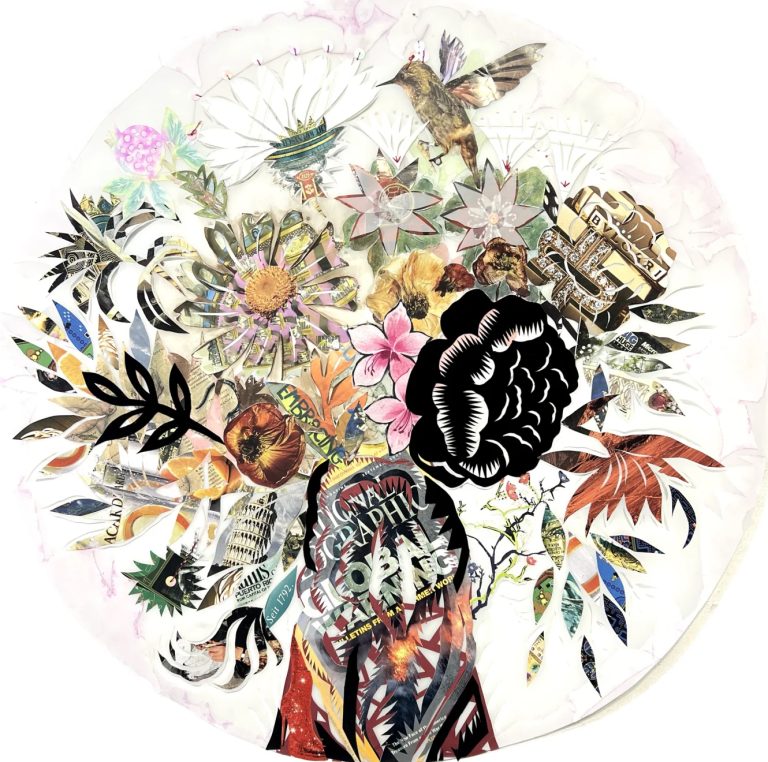
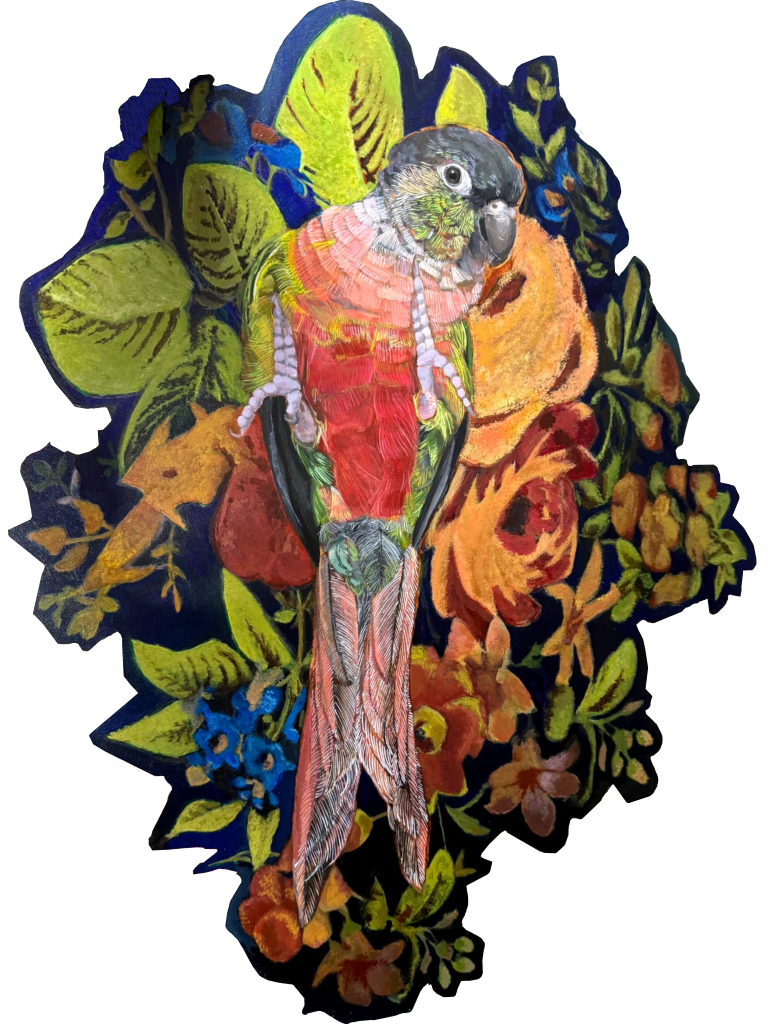
Cover image artwork credit: Margaret Wertheim
On a recent Friday afternoon, I had the pleasure of interviewing Anita, a Seeds student, crochet designer, and aspiring marine biologist. We talked about her journey into the world of fashion and crochet, her commitment to sustainability, and her desire to raise awareness about the impact of fast fashion on our oceans. Through crochet, Anita has learned valuable lessons in resilience, curiosity, and the power of seeking out knowledge independently—qualities that have been essential not only to her craft but also to overcoming the challenges she has faced as a student and young adult.
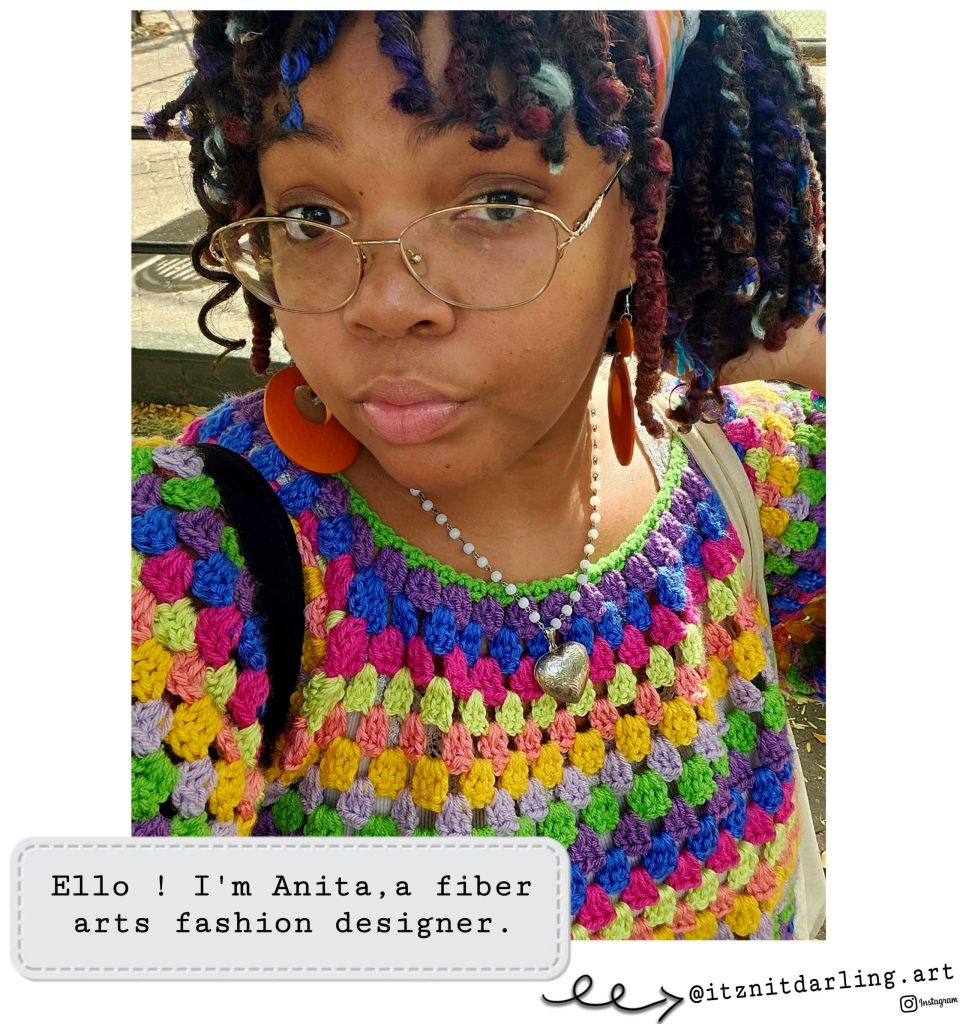
Anita’s passion for crochet began at the age of four when she became captivated by the colorful blanket her mother was making. “I wanted to create something just like that,” she recalled, but her first attempts resulted in a tangled ball of yarn. Through the tedious process of untangling the ball she made, Anita developed an innate appreciation for the materials and patience involved in the craft of crocheting. This experience helped to form Anita’s approach to life’s challenges: where others may be discouraged by a setback, Anita sees an opportunity to learn and grow. Even from this early age, Anita had a deep sense of autonomy when it came to learning; if there was something she wanted to understand, she was determined to find the resources to make it happen.
Inspired in third grade by a stylish teacher, Anita sought to learn what makes someone fashionable. In the library, she was first drawn to books and magazines on classic fashion designers such as Christian Dior. Her curiosity would eventually lead her to documentaries on the history of fashion and Youtube videos on garment making techniques.
When she came across a documentary on the effects of fast fashion, Anita experienced an instant shift in her perspective on the industry and her participation in it. “Learning about its impact on the environment made me want to stop buying new clothes,” she said. This realization spurred her to create her own garments, initially without patterns. At the beginning, “there were many mistakes,” she explained, recounting oversized collars and buttons that wouldn’t close, but each misstep was a lesson learned. Seam allowance, or the extra fabric between the stitching line and the edge of the fabric when sewing two or more pieces of material together, she explained, is something you wouldn’t know was necessary until creating garments without it. These lessons and more were all part of Anita’s self-taught education.
“There is an awareness of both technique and personal expression that informs how Anita approaches each design.”
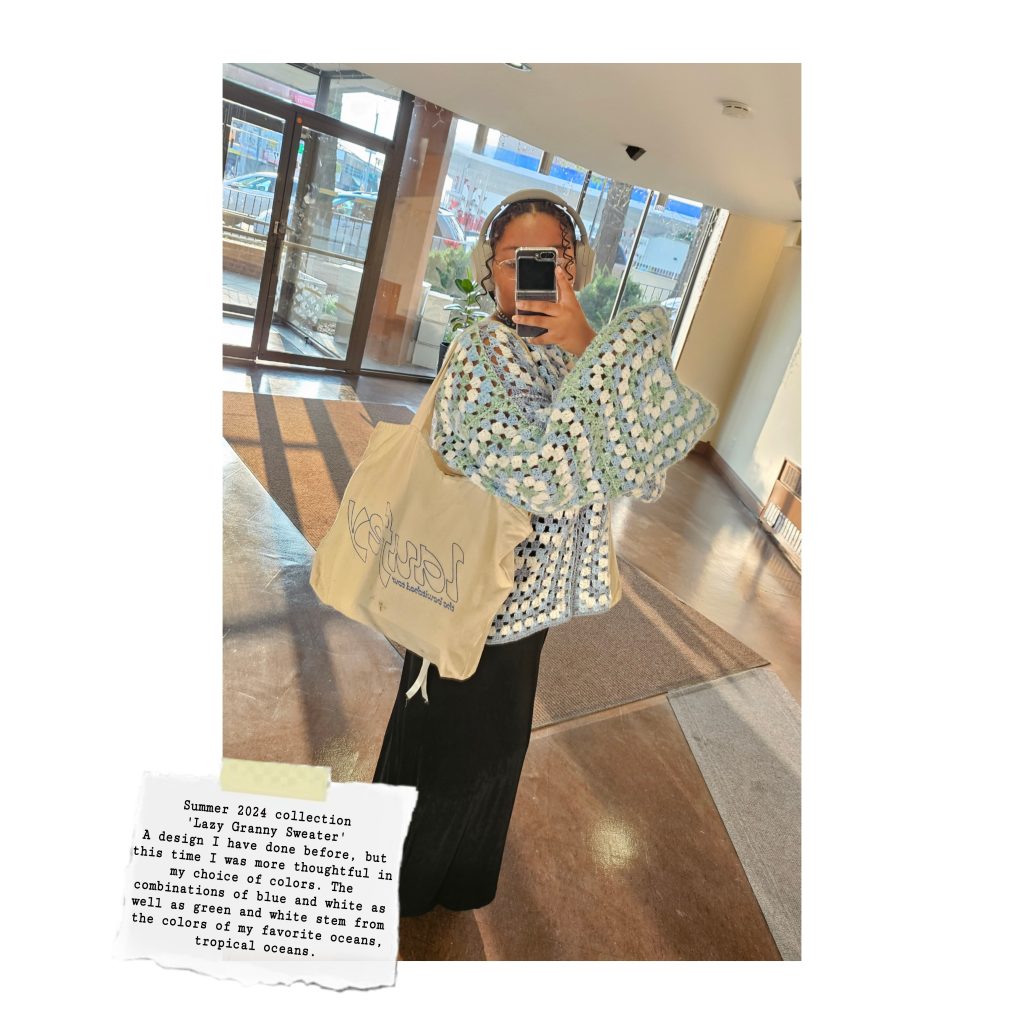
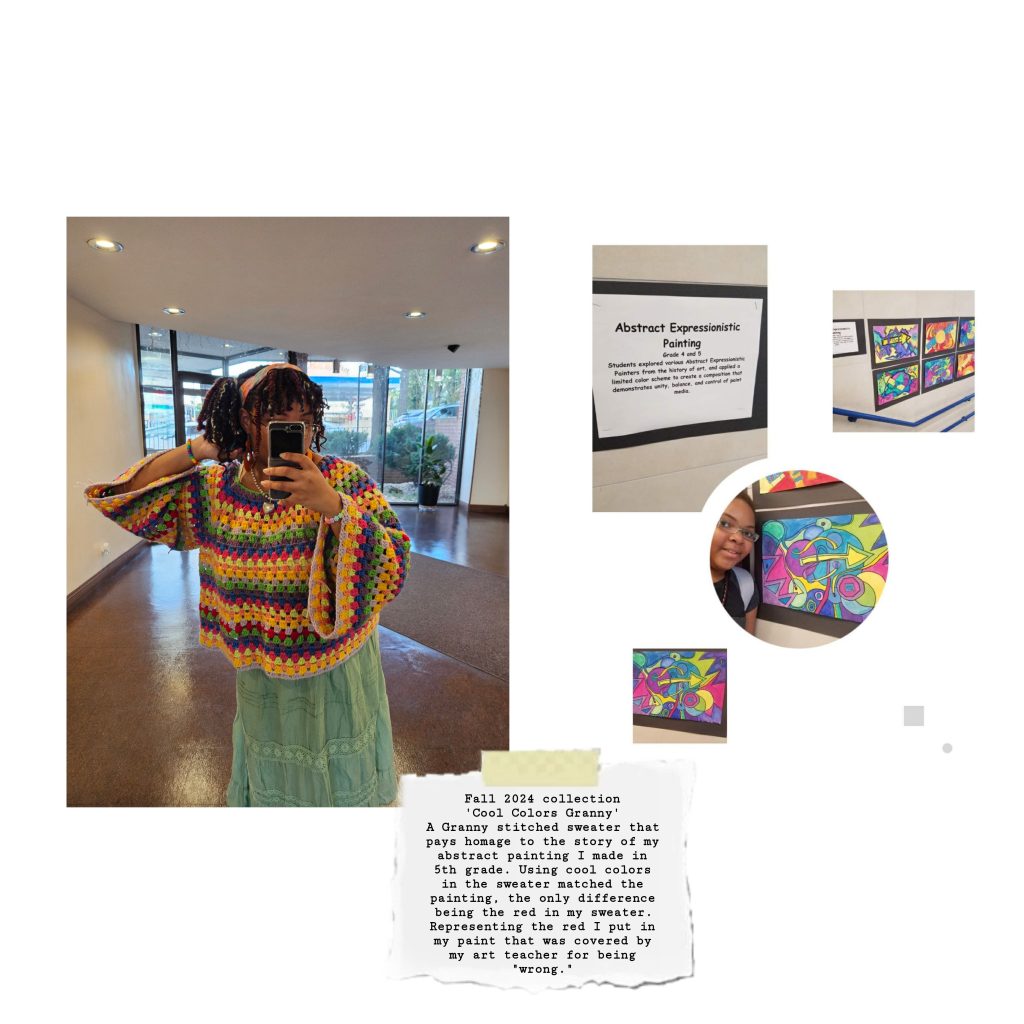
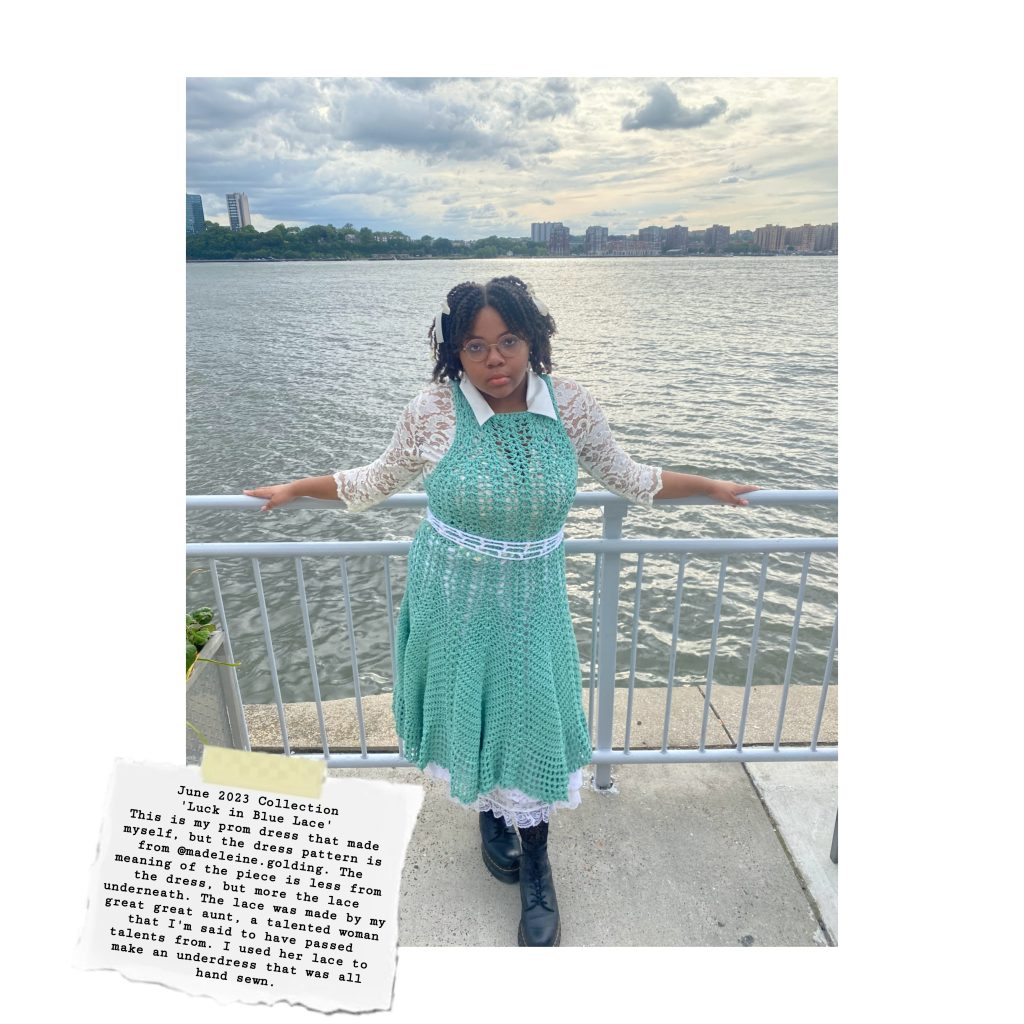
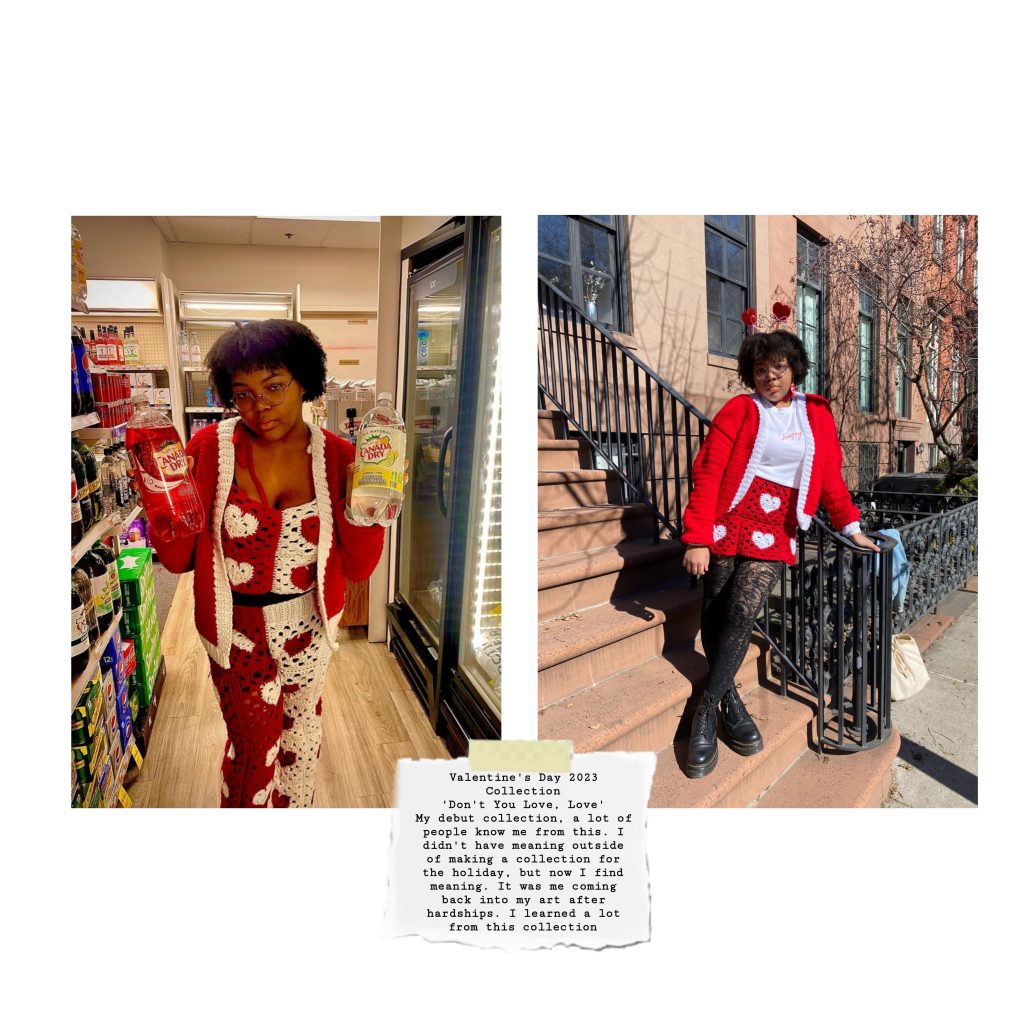
By her freshman year of high school, Anita had progressed to creating wearable pieces. Her approach to making clothing differs from traditional designs; rather than cutting out fabric from a larger piece, she meticulously crafts the fabric itself, allowing her to mold it specifically to the body. Using crochet, Anita controls the design and pattern, tailoring the garment’s fit by strategically increasing or decreasing her stitches. There is an awareness of both technique and personal expression that informs how Anita approaches each design. Her choice of materials also evolved from acrylic yarn to natural fibers, recognizing the importance of durability and sustainability in her selections.
While discovering more about how she might use her creativity to make an impact on the causes she cares about, Anita also navigated the challenges of finding her way as a student. As a freshman, entering a school filled with 4,000 other students, Anita struggled to overcome the anxiety of finding “belonging in the chaos.” She found a sense of solace and community on the varsity Queens Row New York team despite being the only Black student, and eventually transferred to City-as-School, a smaller school that supported her individuality and creative goals. There, Anita found a diverse group of students and was exposed to broader perspectives—an experience that allowed her to grow both as a student and as an artist.
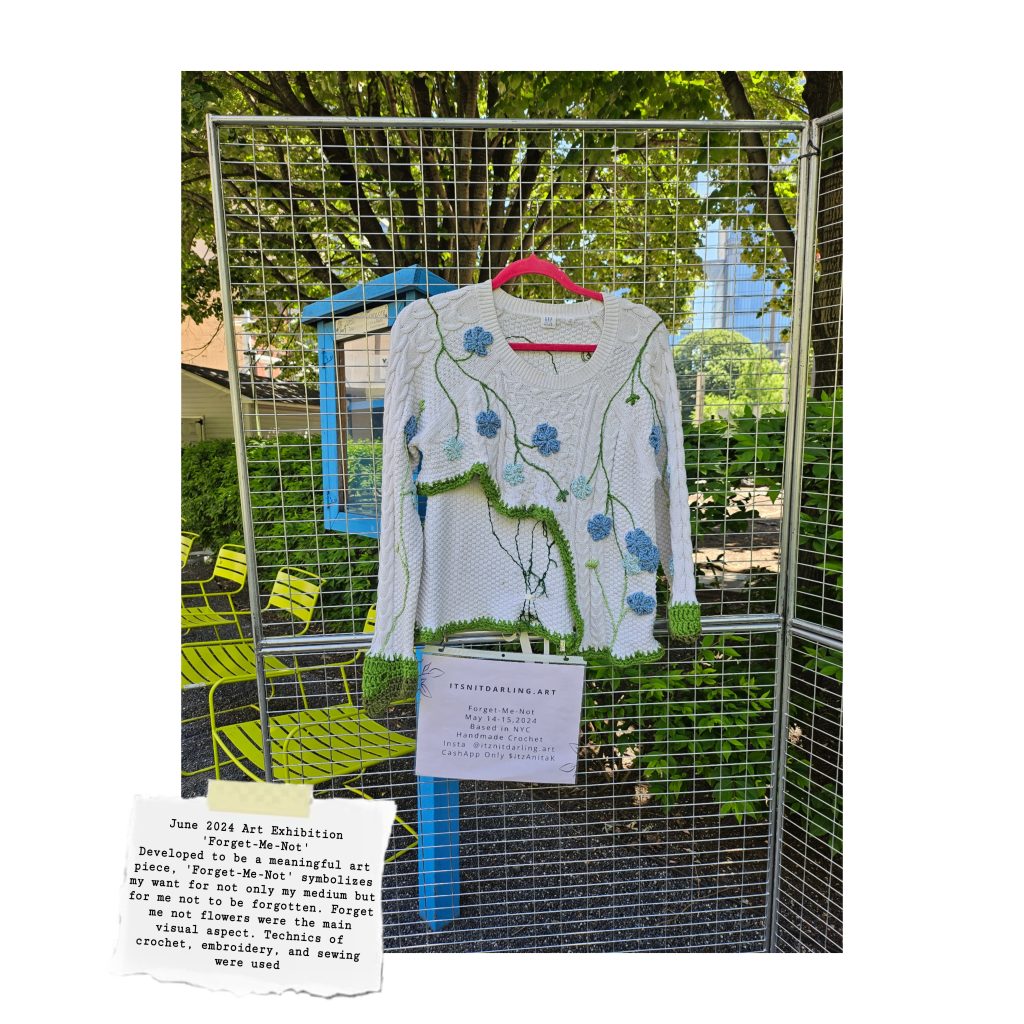
Anita’s design work took on new meaning for her at the end of Junior year when she was invited to show her work, “Forget Me Not” in a pop-up gallery celebrating the completed renovations at Hudson Square Bid Park. Inspired by the blue petaled forget-me-nots flower, Anita applied crocheted flowers and embroidered stems to an upcycled sweater she was otherwise not wearing. “I want my work to make a lasting impression,” she explained. In addition to the featured artwork, Anita crocheted individual flowers as takeaways attached to information about the gallery and her instagram. The gesture emphasized her desire to be remembered beyond the show. Creating artwork for a gallery show forced Anita to think more deeply about the meaning behind her designs and how they could speak to larger themes.
Anita prefers hand sewing or crochet over using a sewing machine. Each stitch made by hand requires an attention to detail to create the consistency she strives for. “It’s ok if the project takes a long time to create,” she told me, proudly exemplifying her definition of slow fashion. The time it takes to make each garment also means that she gets attached to each piece and doesn’t plan to turn her craft into a business.
Anita’s approach to crocheting reflects a broader approach to creativity and life. She is adamant that the drive for consumerism should not be a reason to compromise her vision or push her to use tools, like the sewing machine, which she doesn’t enjoy. These values ultimately set Anita apart from fast fashion brands, whose questionable manufacturing practices trade environmental sustainability for expedited production to the masses–the very issues Anita plans to combat through her work.
“I want to help reverse the impact of fast fashion on our oceans”
Looking ahead to College, Anita aspires to merge her love for crochet with her passion for marine biology. “It’s really random when I tell people,” Anita joked as she told me of her intention to be a Marine Biologist. Yet, as she explained how she settled on this path, it became increasingly clear that Anita’s interests and love for research are deeply grounded in her experience becoming a crochet designer. “I want to help reverse the impact of fast fashion on our oceans,” she told me. As a Marine Biologist, Anita envisions using her crochet to highlight the dangers of fast fashion and its damaging effects on our marine life.
Anita’s journey—from a young student finding her place as an artist and activist advocating for a sustainable future—reflects a deep sense of purpose and resilience. With her creativity, clear vision, and determination to make a difference, she is certain to make an impact at the intersection of fashion and environmental stewardship.