The Samurai Painter
Interview with Miyuki Fuji
As told to Yuki Kano and Denise L. Greene
Yuki is an international student from Tokyo, Japan, currently enrolled in the printmaking certificate program and working as an administrative associate at the League and, Denise L. Greene is the Director of Community Programs at the League.
We first became interested in Miyuki Fuji’s story when we heard by word of mouth that she was the daughter of a kendoist who carries on the tradition of samurai. When we interviewed her, we were surprised to find out her background and the grueling journey she experienced before coming to the United States.
Kendo and Zen
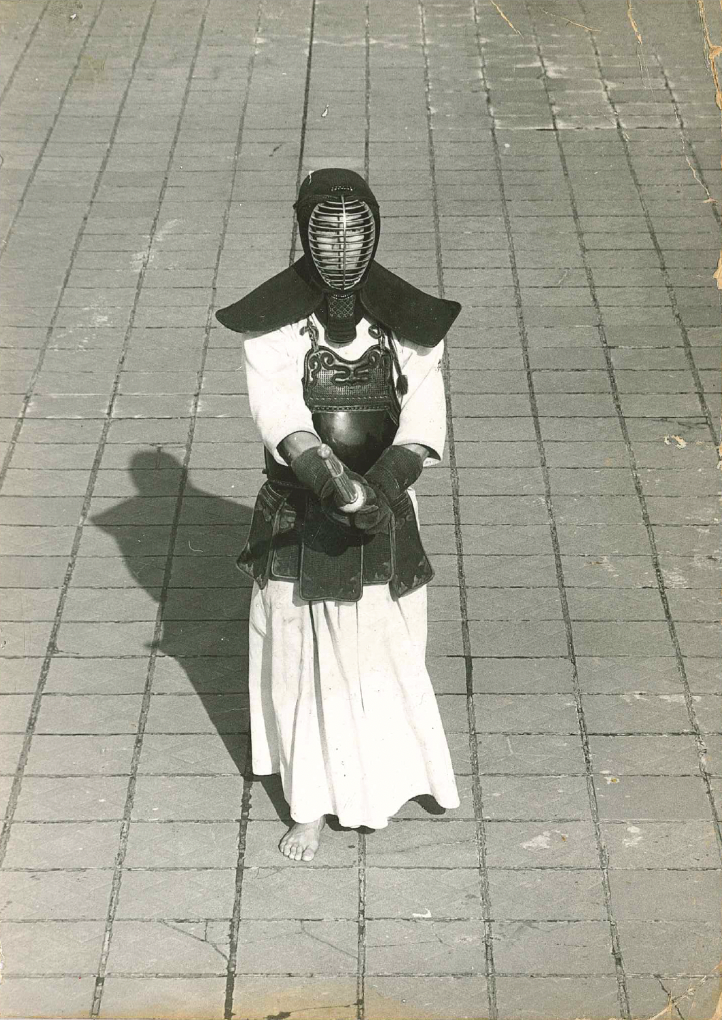
After WWII, my family moved from the Western region of Japan to Tokyo. I’m not sure what family history is, but we celebrated the tradition of samurai. For example, on New Year’s Day, we would have Japanese flower arrangements, a long golden folding screen, traditional Japanese armor, and tarps around the home which were used during wars in Japan to create a secluded space to hide the leaders, which were also not something done in a regular household.
After the samurais no longer existed, the practice of being a swordsman continued, which became a form of martial arts, which is kendo. Since I was an only child, my father raised me as a boy and put a kendo (bamboo) sword in my hands at the age of six. His way of teaching was not gentle, and he had me do traditionnel kendo chores, like cleaning up the dojo. It was very tough. I never had New Year’s like everyone else in Japan, because it was a tradition for kendoists to gather at Nippon Budokan, which is a large martial arts stadium. From New Year’s Eve until New Year’s Day, we would practice kendo and I became one of the trainers. I studied kendo until I was around 20 years old. So, I taught a lot of students, and because I would always get hit by the wooden sword during the lessons, I was always bruised black and purple.
My father taught me Zen. So, the way I spoke to him was always like talking to a teacher or my master. We often talked about Zen and philosophy when I was around the age of 18 and later. After graduating from the Kyoritsu Women’s University where I studied philosophy and Japanese literature, he sent me to a temple to practice Zen, specifically, the teachings of Dogen, who was a Japanese Buddhist monk from the1200s. I went to the temple, but they did not accept me because I was not aware that I needed a reservation. I couldn’t go home because I promised my father. So, I sat outside, sitting still, waiting from morning to night. They finally allowed me in at nighttime. The next day, I began practice, but in the middle of early morning around 3 o’clock, I was woken up by the sound of people running down the hallway. The monks were on their way to the dojo for their Zen practice, and I joined their practices for one month. They were very strict, and it was very tough. After I returned home from the training, I became sick from the let-down effect. So I went to the hospital, and there, I saw a TV show on Africa and made the decision to go to Africa, but I didn’t tell my father. I had savings from working odd jobs. I went to the embassy and did everything to prepare for the trip.
Africa
I needed a visa to travel to Africa, but could not get it in Japan, so I first had to go to Europe to get the visa, and traveled around Italy, France, and then London. There, I met people from different countries like Canada and Australia, all interested in traveling through Africa. Once everyone got a visa, we started in Tunisia, and went through Nigeria, Algeria, and to Kenya. We had a group of 11 people including 2 drivers, and since it was going to be an extremely cheap adventure trip, we all traveled in one truck. It started in the wintertime, and since we were face to face in a small truck for 6 months, it was very strange, full of drama, fighting, and not having enough food. In some markets in Africa, you would only see 3 pieces of black meat and 5 onions being sold. The black part of the meat had flies covering them. There was no food in Africa.
Sometimes, we would sleep at an army camp because we didn’t have enough water. We couldn’t take a bath for a week or so. They let us sleep on their property, outside on the ground. We would stay there for about two days. It was that kind of a trip throughout. For example, in the Sahara Desert, we traveled with a big, very heavy metal plate. The truck would get stuck in sand, so four people had to place the plate under the tires to move forward, and it had to be repeated many times. Oh my god, we pitched a tent and went to sleep on the desert. The next day, under the tent, we had a scorpion. But we were lucky because nobody got hurt. At one point, we were in a jungle and at nighttime, we would have to go to toilet or something, right? We can’t see because it’s really dark. We had to carry a light and walk through something bumpy on the road. I was stepping over these bumpy things, and the next day, I realized it was a large, long snake that was hanging out on the road. Since it was the desert, we were all white, covered in sand. You could not see any other color on us.
The good thing about the Sahara Desert are the stars. The horizon isn’t a line but circular, and you could see the roundness of the earth. It was very dramatic with no sound but lots of stars. Daytime was hot and nighttime was cold, but seeing the stars was a nice experience within the difficult trip. I cannot remember which country we were in, but the weather was nice and we had to pitch a tent into the rocks. I pitched mine towards the top of the rocks, but the rocks were hard to stake into, so some people chose to pitch their tent on the sand. At nighttime, the weather changed, and the rain came. After about 10 – 20 minutes, there was a rush of flood, and two tents were washed away along with all their belongings including their passports. We had to stay for two days because the flood had created a river that was about 30 feet wide, and it was not going away. We couldn’t stay any longer, so we all tied a rope to ourselves to go
through the river to get to the other side. In Kenya, we were waiting at the hospital because someone from the camp broke their bone. Oh my god, it was like a little wood cabin. There were no dividers, and I saw dead people with swollen bodies being carried around. Little by little, people in my group got sick and had to go back to their country. When we arrived in Johannesburg, I couldn’t move anymore. My skin became all yellow. Eventually, I couldn’t eat or drink water because I could not keep it in. I was trying to keep hydrated and eat because I thought I was going to die and decided I needed to go back to Japan.
Human life force is incredible. It was over the weekend, and everything was closed. Although I had no energy to move, I went through town looking for a travel agency. I found a travel agency that was already closed, but I saw someone inside, so I knocked and asked for help. They opened the door for me but there were no tickets to Japan, so I purchased a ticket to Egypt. Once I got to Egypt, I could not move and was laying on the floor of the airport, so they took me to an airport clinic, and a doctor gave me some sort of injection. They took me to a hotel on a stretcher, and this is very strange, but even though I could not move, eat, or drink, I ended up at the hotel restaurant and ordered a steak and peanut butter soup. I thought I had to eat to stay alive. But once I got back to the hotel, I could not keep it in and it all came back out.
I think the next day I returned to the airport, but I don’t know. I am amazed by human survival instincts, because at that time, I didn’t have any energy to sit and wait, so I was laying on the airport floor. The airport housekeeper thought I was a drunk and was pulling on my hair to move me out of the way since I could not move myself. But it’s very interesting because even though I was not fully conscious, I noticed that my flight time had changed and heard the announcement when the departure time came. I made my way to the gate and was able to get on, but I don’t remember how I did it. I immediately lost consciousness on the plane and the flight felt like it was 5 minutes.
Home and Zen
Once I arrived at the Narita Airport in Tokyo, the airport personnel said I should go to the hospital right away because I was turning extremely yellow. But instead, I threw away everything that I had with me except for my passport and a little purse because I could not carry them and took a taxi home. Before I left for Africa, I promised my father that I would come back. The doctor at the time said that I was going to die if I travel in that condition and won’t be able to return. The doctor spoke to my parents, but I refused and left to start the trip. My father told my mom, “she’s going to die and we won’t have a child”. Thinking back, I was selfish because I was only thinking of myself.
When I returned home by taxi, it was around 4 or 5 o’clock in the afternoon. I asked the driver if he could carry my pocketbook because I did not even have the energy to carry it. Our house had a small entry way. Once you enter, there were some steppingstones, then an inner gate, then my garden with a little pond, then the entrance to the house. When I made my way through the inner gate, I saw the back of my father, sitting in Zen style by the pond on a big, flat stone. He was praying in front of a little shrine that he had created for me with stones and a wooden plaque with my name written on it. While I was gone, he was praying every day for an hour or so, wishing for me to return safely.
Before I left for Africa, I told my father that if he fills up my garden with rapeseed blossoms that can be found on the embankment by the Emperor’s Palace, I will come back. He promised he would. They usually bloom between February to May, and when I came home, it was around June or July, so the season had passed and the flowers were almost gone, but I saw a little tiny flower coming out from the side of a stone on the ground, and I realized that he did as promised. At that moment, I collapsed, and I told my father, “I came back. I promised you. I came back,” and then lost consciousness.
The hospital gave me an IV injection for about 8 hours, and I had to stay in the hospital for one or two months. My father came to watch me during that time. I told him not to come because he was already weak with heart disease and had difficulty walking. I wanted him to stay at home, so I told him I don’t want to see his face, but he came anyway. He died 3 months later. I had already left the hospital and was living at home. It’s a very funny thing, because he passed away on the same day as the day I came back from Africa but several months later. It was like he saved me. That is the story.
So I studied more philosophy and Zen, and in my life, my focus is to be sincere, appreciate everything, to help people, and not use any strategies to manipulate the outcome. I told myself that I don’t want to do things the easy way. Others do things their own way, strategizing to reach their goals, but I have to have value for myself. Honesty and sincere work is my way.
The Art Students League
After my father died, I came to the United States and taught kendo in New Jersey. One day, I was on my way to Carnegie Hall and saw a painting at the League. That’s when I decided I’m going to study at the League. I registered for class immediately and began studying. I studied with Robert Beauchamp. After he died, I didn’t paint or practice kendo for 10 years. I couldn’t come to the League because the news was shocking. So, over 30 years, I’ve been in and out of the League.
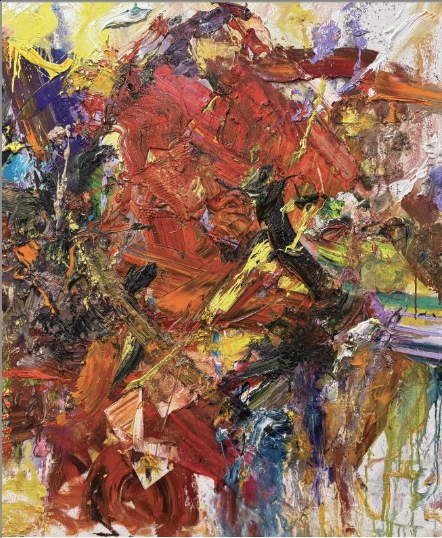
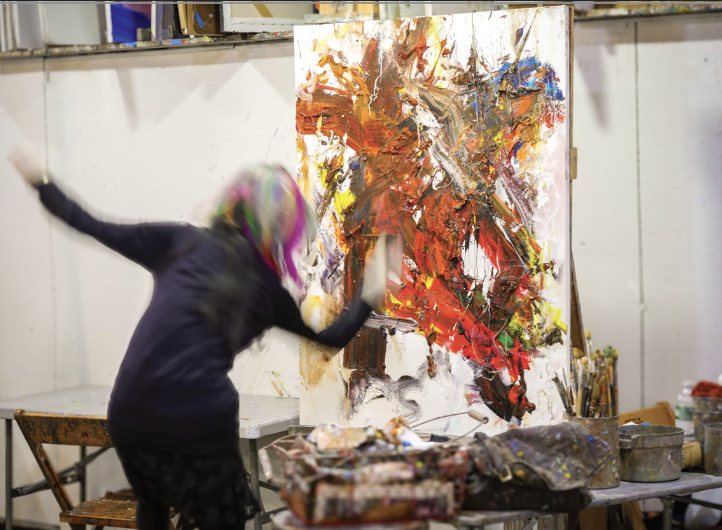
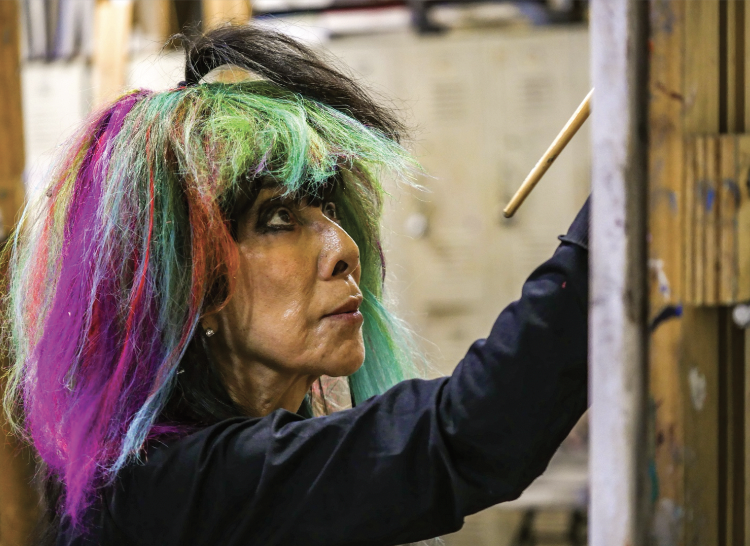
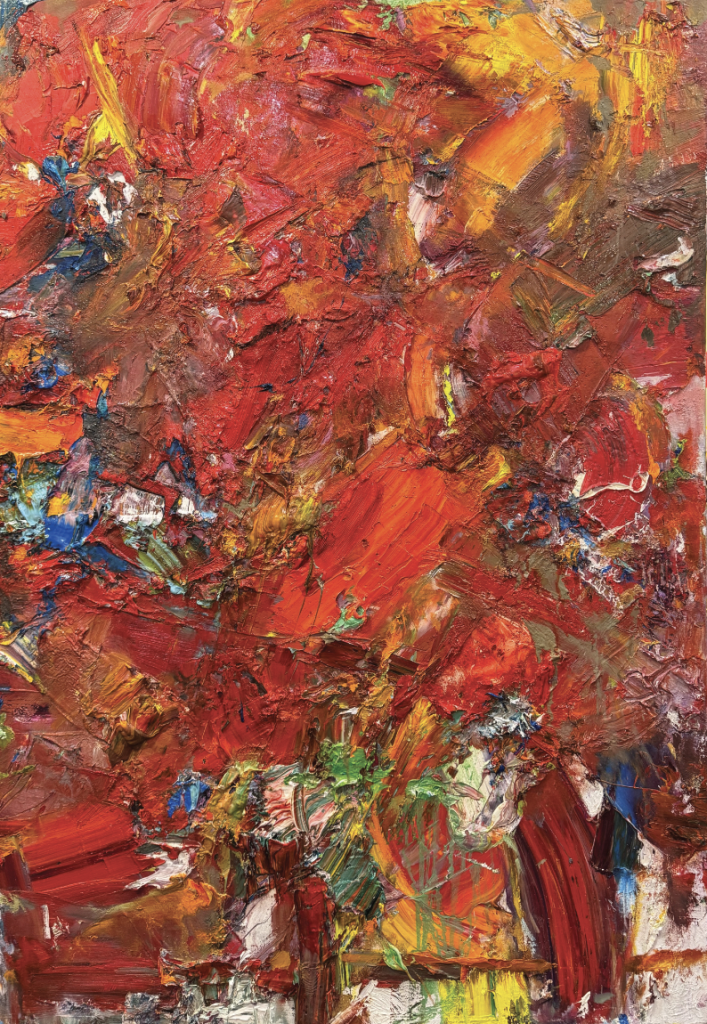
After quitting kendo, I paint as if I am painting with my sword. People laugh at me, but I don’t want to focus on technique, composition, space, or color, because that, I already studied. And to make art, techniques are not necessary. I try to do things without thinking. In America, everything is divided by yes or no, right or wrong. But in Japan, there are nuanced answers that’s in between. Even air has meaning. So, I want to paint that area in between, not focusing on composition or trying to make it “correct.” People say it’s beautiful and that it’s correct, but for me, that is “dead.” I want to paint spontaneously because life and people are interesting and mysterious, and intelligent people think and understand, “I know the life. I know mathematics. I know science.”, but between that, there are a lot of mysterious things, like how I was able to come back from Africa without my full conscious, how I could see the change in departure time, how I don’t remember the airplane ride that felt like a second, and how I made my way home. How I could not see the surroundings, but I was able to see the little flower in the garden. Those experiences make me feel that there is something very deep that I want to paint. When I start painting, until I have something, I do not stop. I must be sincere and have a conversation with the canvas.
Earlier, I didn’t have this kind of thinking. I was caring about composition, and asked people for opinions, and I was doing the same thing as others. But now, I do not want to anymore. I got old, and people’s viewpoint no longer matters. I would say it changed within the past year. I studied spirit and Zen with my body, but nothing worked. It works now but wanting a natural and sincere way is a recent change. Spirit has to be physical work, color work, and all happening together at one time. If I try to use a technique, it gets muddy. To take off and put on color, that’s not a fresh, spontaneous color. That’s why I’m a samurai painter.
Supporting Myself
In the beginning, I was teaching kendo so I was making money that way because I had a lot of students. But after I began painting, Rosina Florio, the executive director, helped me a lot. I studied with her husband, Andrew Lukach.
After she passed away, nobody helped me, so little by little, it has not been easy, but someday, I want to paint a good, childlike, powerful, energy exploding kind of painting. Something like a volcano. That’s my goal and I will do my best. That’s why until the canvas is almost filled and finished, I do not want to stop. I cannot make a good painting, but it’s okay. I just need to continue. It’s like a bonsai. The tree is meant to be straight, but a bonsai is grown painstakingly, and my painting is no good, but someday, maybe it will be like a bonsai where the beauty is appreciated through a lot of hard work.
My neighbor had a gallery with a huge space. I exhibited 25 to 30 paintings and a sculpture, but the gallery closed because the owner left for another state. After that, I did not want to show any more because I couldn’t do everything. It was a lot to prepare. So, I just paint. I painted nine paintings in the last few months. I am also not a quiet painter, so my teacher, Margaret McCann, said to bring a curtain. I’m a troublemaker. Before McCann, I studied with Knox Martin.
No Regrets
Many people often say, “I should have done this” or “I shouldn’t have done that,” but with me, I did and I lived.
Miyuki believes that the importance in painting is to paint with determination. She expressed how it does not hurt to have a big dream that’s pure, and that having a purpose will get you through. She wants kids to know that not giving up brings you closer to possibility, one step at a time, and to experience both positives and negatives, as it will allow you to grow. She hopes that they create with passion, put one’s heart and soul into their lives, live life to the fullest, and to stay humble.
She says, “Until I can express my authentic self, I want to continue attacking the canvas with bursting conviction. That is the kind of art I want to create.”